
2025/12/24
Editorial Column
Taiwan Exosome Industry Joins Forces with National Yang Ming Chiao Tung University! Focusing on Urological Diseases

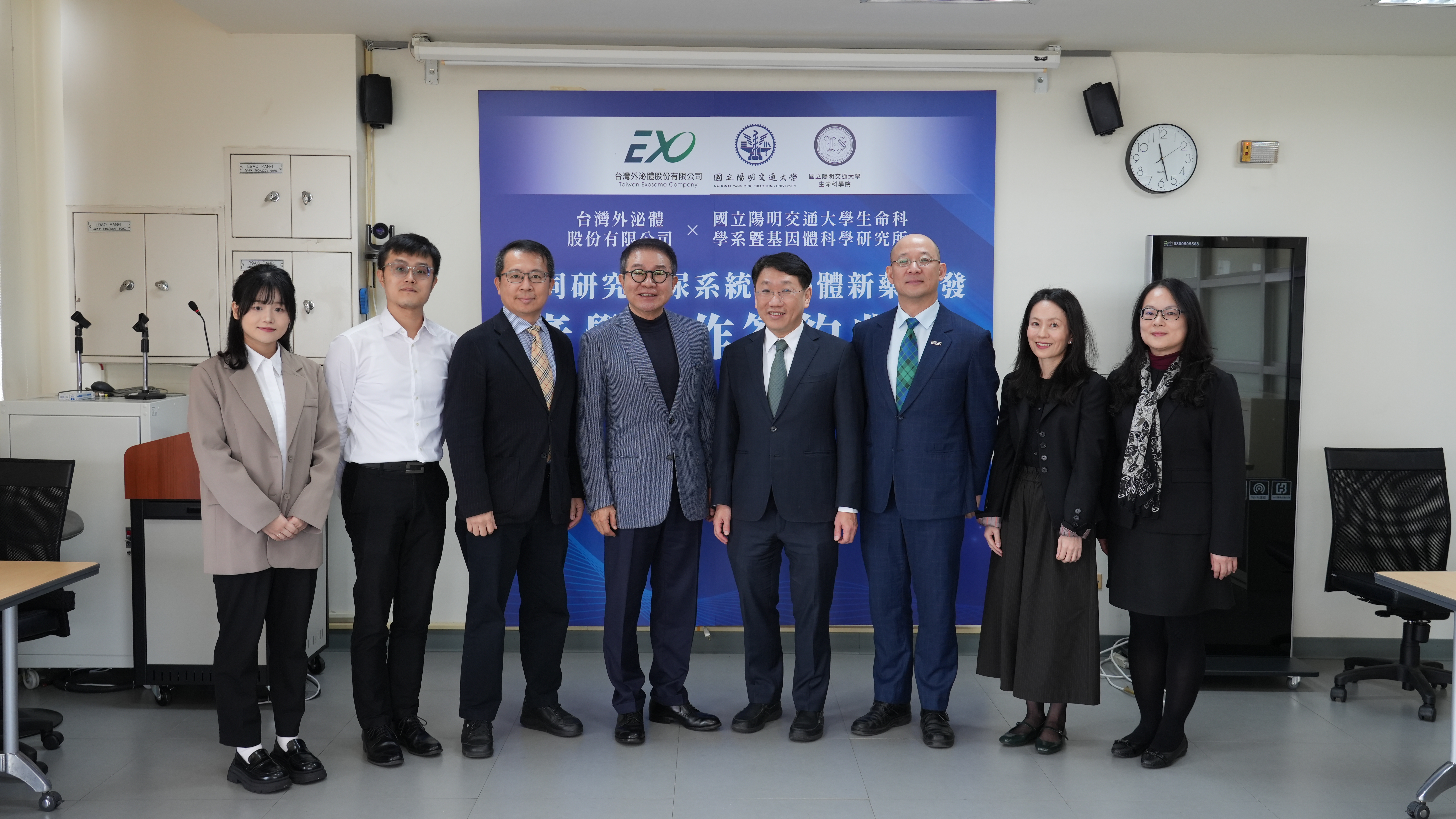
▲Taiwan Exosome Company and the Department of Life Sciences and Institute of Genome Sciences at National Yang Ming Chiao Tung University (NYCU) officially signed an industry-academic cooperation agreement. Fourth from right: Yang Mu-hsuan, Vice President of NYCU; Lien Cheng-chang, Dean of the College of Life Sciences (third from right); Li Mei-hsuan, Associate Dean of R&D (second from right); and Associate Professor Li Hsiao-hui, the project leader (first from right). Hung Chi-chang, Chairman of Taiwan Exosome Co., Ltd. (fourth from left); Dr. Lin Chieh-liang, COO and CTO (third from left); Attorney Yang Ming-yi, CLO and CAO (second from left); and Wu Pei-jung, Associate Researcher (first from left). (Photo/Provided by Taiwan Exosome Company)
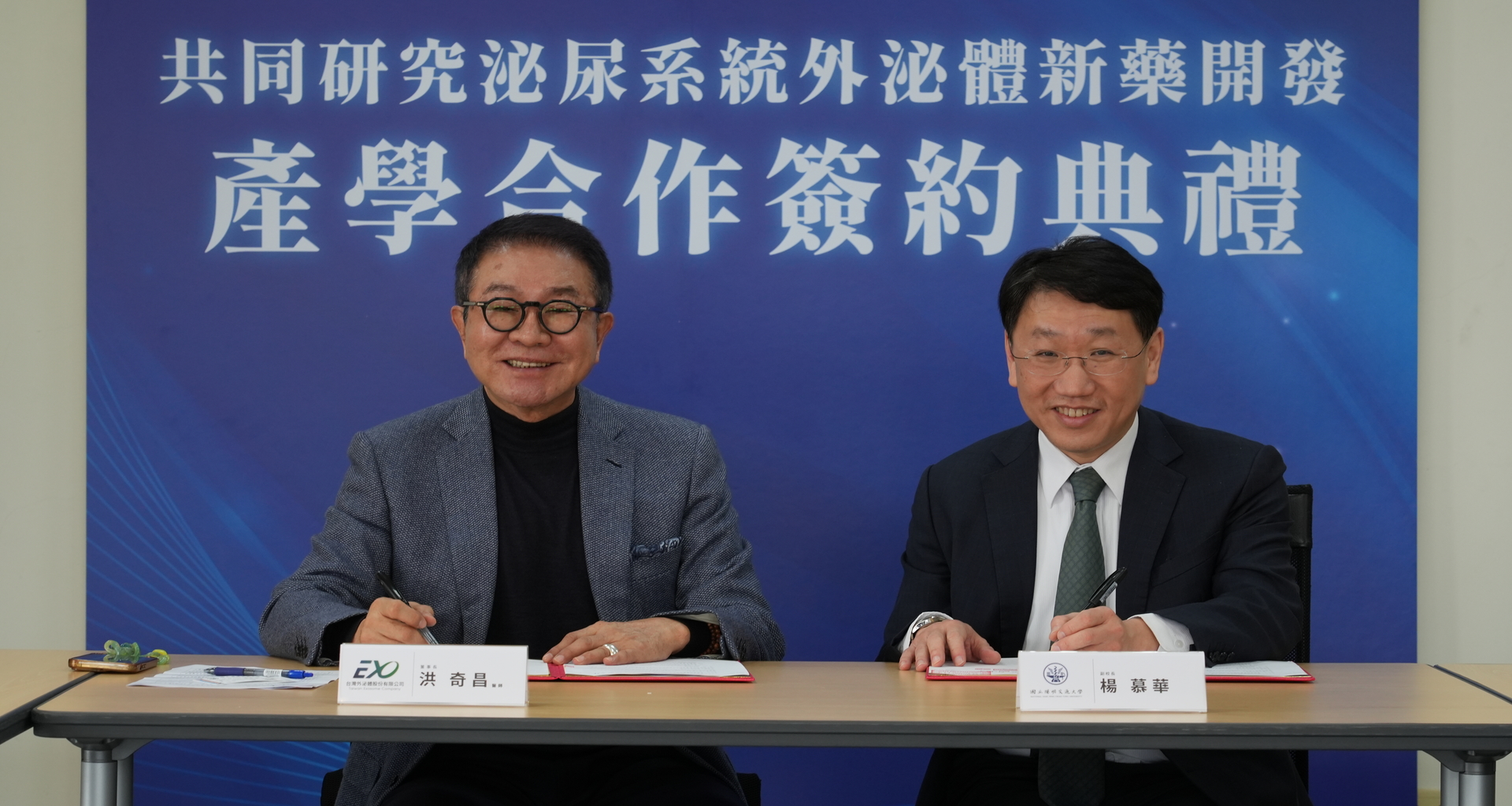
[NOWnews Today's News] Taiwan Exosome Co., Ltd. signed an industry-academic cooperation agreement today (19th) with the Department of Life Sciences and Institute of Genome Sciences at National Yang Ming Chiao Tung University to develop new drugs for urinary system diseases. Dr. Lin Chieh-liang, CTO of Taiwan Exosome Company, stated that pursuing drug development is intended to create market differentiation.
Hung Chi-chang, Chairman of Taiwan Exosome Company, mentioned that exosomes are extracellular vesicles with a diameter of approximately 30 to 150 nanometers. They are released into the extracellular environment by cells through exocytosis and contain various biomolecules such as proteins, lipids, and nucleic acids. They are considered crucial mediators for intercellular communication.
Hung pointed out that recent studies have shown exosomes play a significant role in tissue repair, inflammation regulation, and cellular microenvironment remodeling, gaining much attention in the fields of regenerative medicine and precision medicine. In the field of the urinary system, animal experiments involving disease models for acute kidney injury, urinary tract mucosal damage, and bladder dysfunction have shown that exosomes have the potential to regulate inflammatory responses and support microvascular and tissue repair mechanisms. However, the relevant mechanisms still need to be verified through scientific and clinical research.
Lin Chieh-liang mentioned that NK cells themselves have a high correlation with cancer. While cell therapies centered on NK cells tend to be more expensive, the company still leans toward focusing on chronic diseases or conditions requiring repair.
Lin believes that in the process of developing pharmaceuticals, every milestone presents an opportunity to develop products such as nutritional supplements. However, the goal remains to achieve market differentiation while aligning with international pharmaceutical standards.
Lin noted that there are currently two clinical trials in the United States that have reached Phase III. Developing pharmaceuticals is relatively difficult, but the company aims to enter a "Blue Ocean" market. Drug development is expected to enter clinical trials within 2 to 3 years, primarily related to autoimmune-induced conditions, with future expansion into applications such as bladder repair, kidney regeneration, and prostate improvement.
Looking at the global burden of disease, urinary system diseases have become a major public health issue. According to statistics, there are approximately 700 million to 1 billion patients with Chronic Kidney Disease (CKD) worldwide. CKD has risen to become the ninth leading cause of death globally, causing about 1.5 million deaths annually. The prevalence of urinary tract stones in the global adult population is approximately 5 to 10%, indicating that urinary system-related diseases have a long-term and profound impact on healthcare systems and social costs. In Taiwan, the burden of urinary system diseases is equally heavy.
▲Taiwan Exosome Company points out that exosomes play an important role in tissue repair, inflammation regulation, and microenvironment remodeling. (Photo/Provided by Taiwan Exosome Company)