2025/12/26
Editorial Column
Taiwan Exosome Company Opens a New Chapter in Regenerative Medicine! Storming the Japanese Bridgehead to Lead the Global Pharmaceutical Market
Taiwan Exosome Company Opens a New Chapter in Regenerative Medicine! Storming the Japanese Bridgehead to Lead the Global Pharmaceutical Market

(Second from left) Dr. Chen Zhen-xing, CEO of Taiwan Exosome Co., Ltd.; (First from left) Dr. Lin Jie-liang, COO and CTO; (Third from right) Supervisor and Distinguished Professor Chu Chun-chieh; (First from right) Li Wen-yu, Cell Factory Team Leader, and the R&D team.
Powered by Taiwan Exosome Co., Ltd.
2025/12/26
Following the AI industry, exosomes are expected to become the second "Silicon Shield" (National Guardian Mountain) to take the baton from AI.
In Taiwan, there is a biotech startup that possesses dual technologies in exosome development and NK cell therapy—capabilities rare globally. Starting from Taiwan's technological innovation and partnering with Japanese manufacturing, they are opening up global market channels.
Originally considered cellular metabolic waste, exosomes were deeply researched by three American and German scientists who unlocked the mechanism of information transmission between cells, leading to the 2013 Nobel Prize in Physiology or Medicine.
Since then, the global scientific community has gradually revealed the abilities of exosomes to repair tissues and activate cells, making them a hot topic in regenerative medicine and hailed as the most investment-worthy emerging industry "after AI." Currently, in addition to being widely used in medical aesthetics, the medical community holds high hopes for using them to treat major diseases.
R&D Hard Power: First Company in Taiwan Certified by the Ministry of Health and Welfare
Founded in 2021, Taiwan Exosome Co., Ltd. (TEC) has mastered core technologies for developing human, animal, and plant exosomes. Aiming at hard-to-treat diseases such as autoimmune diseases and sarcopenia, it has established a "Medical-Grade Exosome Industrial Technology Platform."
Dr. Chen Zhen-xing, CEO of Taiwan Exosome Co., Ltd., pointed out that the company is the only one domestically and one of the few internationally to simultaneously deploy three sources of exosomes—human, plant, and animal. Based on the commonality of basic elements (such as carbon) in biological cells, synchronous research and development are conducted. Consequently, the company obtained approval from the Ministry of Health and Welfare for "Allogeneic NK Cell (Natural Killer Cell)" technology (the 6th in the world and 1st in Taiwan), possessing three major manufacturing advantages: "Immune Cell Preparations, Exosome R&D, and Academic-Medical Clinical Validation."
Powered by Taiwan Exosome Co., Ltd.
2025/12/26
Following the AI industry, exosomes are expected to become the second "Silicon Shield" (National Guardian Mountain) to take the baton from AI.
In Taiwan, there is a biotech startup that possesses dual technologies in exosome development and NK cell therapy—capabilities rare globally. Starting from Taiwan's technological innovation and partnering with Japanese manufacturing, they are opening up global market channels.
Originally considered cellular metabolic waste, exosomes were deeply researched by three American and German scientists who unlocked the mechanism of information transmission between cells, leading to the 2013 Nobel Prize in Physiology or Medicine.
Since then, the global scientific community has gradually revealed the abilities of exosomes to repair tissues and activate cells, making them a hot topic in regenerative medicine and hailed as the most investment-worthy emerging industry "after AI." Currently, in addition to being widely used in medical aesthetics, the medical community holds high hopes for using them to treat major diseases.
R&D Hard Power: First Company in Taiwan Certified by the Ministry of Health and Welfare
Founded in 2021, Taiwan Exosome Co., Ltd. (TEC) has mastered core technologies for developing human, animal, and plant exosomes. Aiming at hard-to-treat diseases such as autoimmune diseases and sarcopenia, it has established a "Medical-Grade Exosome Industrial Technology Platform."
Dr. Chen Zhen-xing, CEO of Taiwan Exosome Co., Ltd., pointed out that the company is the only one domestically and one of the few internationally to simultaneously deploy three sources of exosomes—human, plant, and animal. Based on the commonality of basic elements (such as carbon) in biological cells, synchronous research and development are conducted. Consequently, the company obtained approval from the Ministry of Health and Welfare for "Allogeneic NK Cell (Natural Killer Cell)" technology (the 6th in the world and 1st in Taiwan), possessing three major manufacturing advantages: "Immune Cell Preparations, Exosome R&D, and Academic-Medical Clinical Validation."
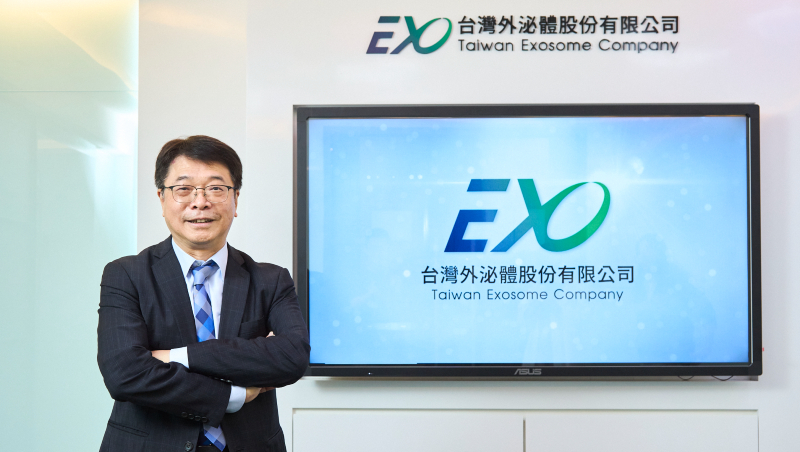
Dr. Chen Zhen-xing, CEO of Taiwan Exosome Co., Ltd.
Taiwan Technology + Japanese Manufacturing: Aiming at the Global Market
Currently, Taiwan Exosome Co., Ltd. is invested in research related to exosomes released by NK cells, covering clinical fields such as cancer, autoimmunity, neurodegeneration, and anti-aging, demonstrating the R&D energy of innovative biomedical technology.
Compared to major pharmaceutical powers in Europe and America, the R&D strength of Taiwan Exosome Co., Ltd. is highly competitive internationally. Furthermore, Dr. Chen believes that the exosome injections currently under development are estimated to cost less than 10,000 TWD per dose. Compared to traditional cell therapies that often cost millions, the price is extremely affordable. Additionally, they can be stored at room temperature and are resistant to X-ray radiation, which facilitates global shipping and market penetration.
However, pushing Taiwan-made pharmaceuticals into the global market is no simple task. Dr. Chen explained that the low global visibility of Taiwan's new drug development increases the marketing difficulty of international deployment. Therefore, Taiwan Exosome Co., Ltd. has formulated a "Leveraging Strength" market strategy: heading to Japan, a neighboring country and an Asian market hub, to collaborate with the century-old leader, Toyota Holdings.
In July 2025, Taiwan Exosome Co., Ltd. and Toyota jointly established "Japan Exosome Co., Ltd.," with Dr. Chen serving as Chairman. Taiwan Exosome Co., Ltd. is responsible for driving the core technology, paired with Japan's rigorous, mature, and quality-guaranteed drug manufacturing, as well as its trusted marketing channel advantages, to explore the Japanese and international markets.
"Japanese clinical data is more easily recognized by the United States and the European Union, making it the best springboard for entering the global market," said Dr. Chen. Japan Exosome has already scheduled its development timeline, with production and pre-clinical trials expected to launch in Japan in the first quarter of 2026.
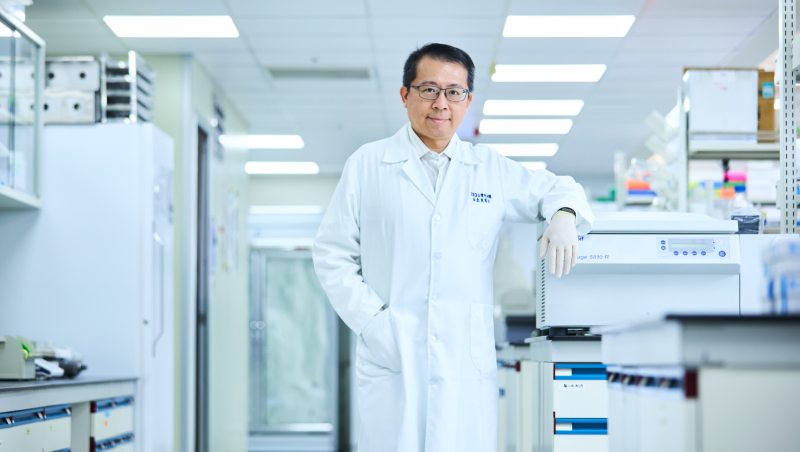
Dr. Lin Jie-liang, COO and CTO of Taiwan Exosome Co., Ltd.
Deepening Industry-Academic Cooperation to Compete with Global Giants
In addition to showing proactivity in new drug development, Taiwan Exosome Co., Ltd. has never stopped its R&D pace, despite its technology already being in a leading global position. "We need to run faster than international giants, which requires close industry-academic cooperation with domestic academic and medical circles that have strong medical technology, achieving results through the alliance of the strong," emphasized Dr. Lin Jie-liang, COO and CTO of Taiwan Exosome Co., Ltd.
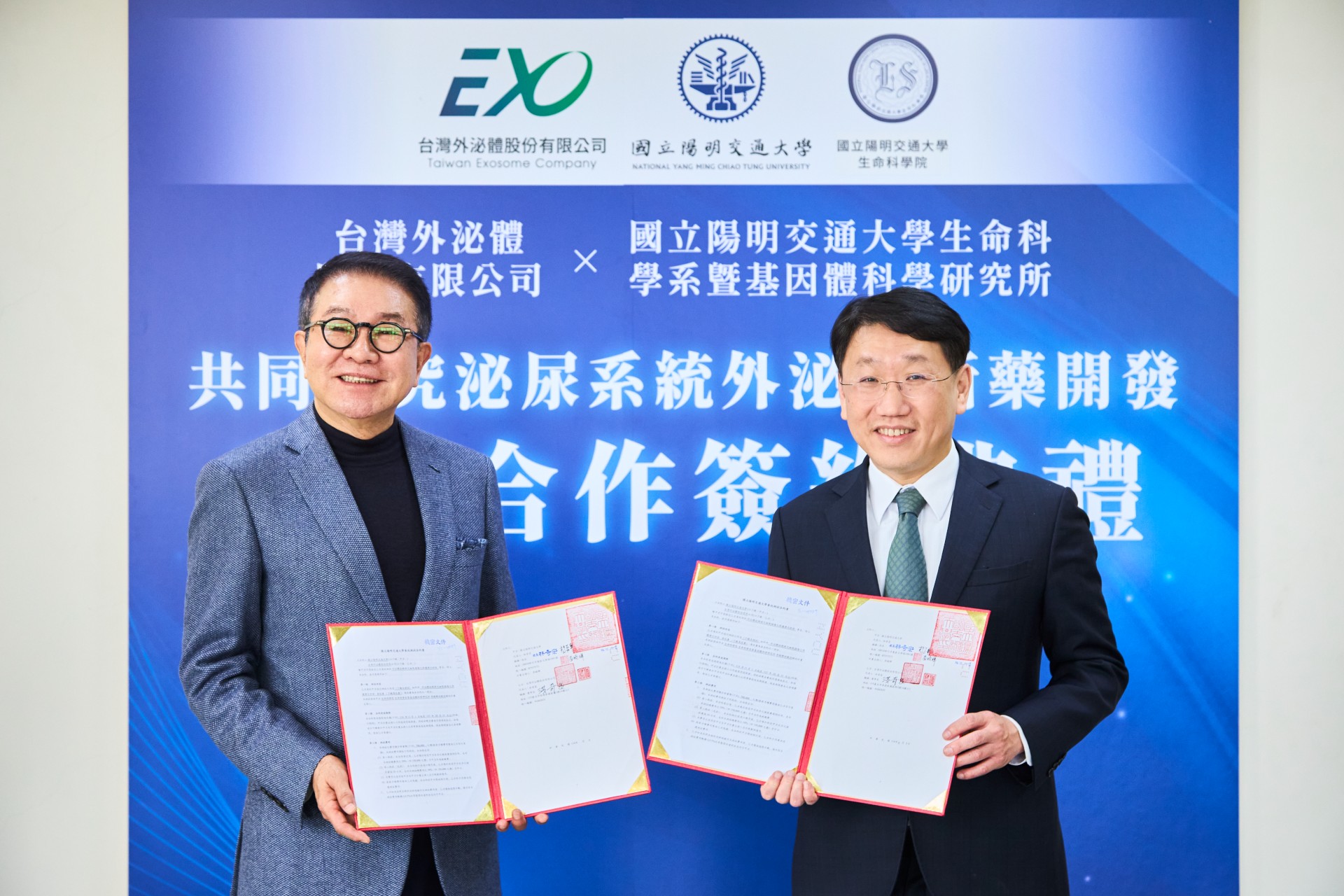
Taiwan Exosome Co., Ltd. has already provided clinical cells to Linkou Chang Gung Memorial Hospital and Tainan National Cheng Kung University Hospital for Phase I clinical trials of colorectal cancer, and Phase I and II clinical trials for pancreatic and cholangiocarcinoma, respectively. Recently, in response to Taiwan's status as a "Kingdom of Dialysis," the company signed an industry-academic cooperation agreement with the Department of Life Sciences and Institute of Genome Sciences at National Yang Ming Chiao Tung University (NYCU). This combines biotech industry power with top academic research energy to focus on the R&D and application of exosome technology for urinary system-related diseases.
Hung Chi-chang, Chairman of Taiwan Exosome Co., Ltd., who long promoted the "Two Laws of Regenerative Medicine" during his tenure as a legislator, pointed out that as an R&D-oriented enterprise, the company focuses on developing "clinical-grade non-genetically modified and universal NK cell preparations" and NK cell exosome manufacturing processes. This establishes operational advantages in immune cell preparations, exosome R&D, and academic-medical clinical validation. For animal experiments on urinary system disease models, the company draws on NYCU’s scientific and clinical research, hoping to verify the "reversible" mechanism of exosomes in regulating urinary system inflammatory responses and supporting microvascular and tissue repair.
"This industry-academic alliance can accelerate the process from animals to human clinical trials. It is expected that pre-clinical validation and regulatory compliance will be completed within 2 to 3 years, eventually expanding to multiple applications such as bladder repair, kidney regeneration, and prostate improvement," Dr. Lin Jie-liang further pointed out. Based on existing clinical-grade processes and product development capabilities, Taiwan Exosome Co., Ltd. will gradually introduce NYCU’s clinical research scenarios, including technical validation and safety assessments for disease models like acute kidney injury and urinary tract mucosal injury, with plans to evaluate expansion into areas like bladder repair in the future.
Although research on exosomes is still developing, it is seen as a potential dawn for future disease resistance and tissue repair. With rigorous scientific validation, it has the opportunity to bring new hope to patients worldwide. Hung Chi-chang also expects that with the domestic promotion of the "Two Laws of Regenerative Medicine" and the "Healthy Taiwan" policy, the R&D and application of exosomes will move toward industrialization as regulations fall into place and the development environment improves. Coupled with Taiwan's superior medical technology and comprehensive National Health Insurance database, the overall exosome industry is poised to become Taiwan's second "Silicon Shield."